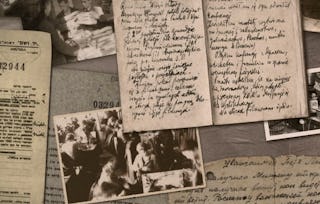
The Holodomor, one of the major tragedies of the twentieth century, became the subject of serious study only since the fall of the USSR. In this thirteen module course you will explore recent research through the prisms of colonialism, empire, genocide, famine and food security, (dis)information dissemination, and Ukrainian-Russian relations.

Famine as Genocide: The Holodomor in Ukraine
Limited time! Save 40% on 3 months of Coursera Plus and full access to thousands of courses.

Recommended experience
What you'll learn
Gain knowledge of the impact of the Holodomor in Ukrainian, Soviet and world history
Be able to place the Holodomor in the broader context of Genocide Studies
Reflect on the relevance of the Holodomor to the current political developments in the region and the Russian war on Ukraine
Details to know
51 assignments
See how employees at top companies are mastering in-demand skills

There are 14 modules in this course
This introductory module provides information on Ukrainian geography and history as a context for understanding the Holodomor. The module also summarizes the major topics dealt with in subsequent modules.
What's included
14 videos2 assignments
Some of the largest famines ever recorded, including the Holodomor, occurred in the 20th century, an age of unparalleled food abundance. This module examines how modern famine shifted from natural to man-made causes.
What's included
14 videos7 assignments
This module is the first of two examining the broader historical context of the Holodomor. It explores the Bolshevik Party’s struggle to establish control over the former Russian Empire between 1917 and 1922 and considers how the legacy of revolution, war, mass violence, and economic collapse shaped the formation of the Soviet state.
What's included
15 videos2 assignments
This module examines how the Soviet state and economy were transformed in the 1920s and how Stalin’s radical program of industrialization and collectivization, introduced in 1928, set the stage for famine.
What's included
16 videos2 assignments
Recent research has revealed significant differences in famine mortality across the Soviet Union. This module is the first of two that explore what made the Holodomor in Soviet Ukraine different from famine elsewhere. It examines how and why Ukraine and Ukrainians were targeted.
What's included
11 videos3 assignments
This module examines specific policies and measures introduced in Soviet Ukraine in the winter of 1932-33 that willfully intensified the famine. It looks at how the Soviet grain procurement drive evolved into a larger campaign waged by Stalin and the Kremlin leadership for political control over Ukraine.
What's included
15 videos2 assignments
What was starvation like for those who experienced it? What were the ways people tried to save themselves and their families? This is the first of two modules that draw on survivor and witness testimonies to address the experience of the Holodomor “from below.”
What's included
18 videos1 reading3 assignments
This module explores additional survival strategies adopted by the rural population during the Holodomor and analyzes how the authorities used food and a rationing system to reward or punish specific groups within Soviet society.
What's included
14 videos4 assignments
Ukraine in the 1920s experienced a cultural renaissance after centuries of Russian imperial oppression. This module examines the transformation of Ukrainian education and urban life and the remarkable achievements in Ukrainian literature, visual arts, theater, and film that were cut short by the Stalinist regime’s suppression of Ukrainian culture and cultural elites ─ part of the multi-pronged attack on Ukraine in the late 1920-early 1930s.
What's included
16 videos6 assignments
What did the international community know about the Holodomor during the early 1930s? Far from being a "hidden famine," awareness was widespread, even among those who publicly denied it was happening. By looking at the efforts of media, governments, and private organizations to cover ─ and cover up ─ the tragedy, this module provides insight into contemporary discussions about misinformation, propaganda, and mass atrocity.
What's included
16 videos3 assignments
This module looks at the origins of the concept of genocide, its definition under international law, and how public understanding of genocide has changed from its legal definition in 1948. The module also presents common misperceptions and key debates about genocide and provides an overview of the dynamics of the Ukrainian Holodomor within comparative genocide studies frameworks.
What's included
13 videos6 readings6 assignments
In this module, we explore the short- and long-term impacts of the Holodomor, not only for Ukraine but for the USSR and beyond. Although the famine had largely ended by the fall of 1933, its consequences continued to affect the physical and mental health of survivors and had long-term impacts on social relations and society, as well as on agriculture and the environment.
What's included
15 videos6 assignments
How was the memory of the Holodomor shared and passed on? In this module we look at the concept of collective memory, used by anthropologists, sociologists, historians, and psychologists. This module provides an overview of the dynamics of collective memory; the social, cultural, and political contexts of transnational memory formation; and the complex processes of collective Holodomor memory formation in and outside of Ukraine.
What's included
14 videos5 assignments
What's included
1 video
Instructor

Offered by
Why people choose Coursera for their career

Felipe M.

Jennifer J.

Larry W.

Chaitanya A.

Open new doors with Coursera Plus
Unlimited access to 10,000+ world-class courses, hands-on projects, and job-ready certificate programs - all included in your subscription
Advance your career with an online degree
Earn a degree from world-class universities - 100% online
Join over 3,400 global companies that choose Coursera for Business
Upskill your employees to excel in the digital economy
Frequently asked questions
To access the course materials, assignments and to earn a Certificate, you will need to purchase the Certificate experience when you enroll in a course. You can try a Free Trial instead, or apply for Financial Aid. The course may offer 'Full Course, No Certificate' instead. This option lets you see all course materials, submit required assessments, and get a final grade. This also means that you will not be able to purchase a Certificate experience.
More questions
Financial aid available,