Nursing Courses
Nursing courses can help you learn patient care techniques, medication administration, health assessment, and ethical decision-making. You can build skills in critical thinking, effective communication with patients and families, and teamwork in clinical settings. Many courses introduce tools like electronic health records (EHR) systems, patient management software, and simulation labs that enhance hands-on learning and prepare you for real-world healthcare environments.
Popular Nursing Courses and Certifications
 Status: Free Trial
MedCerts
Skills you'll gain: Medical Terminology, Patient-centered Care, Healthcare Ethics, Conflict Management, Patient Communication, Anatomy, Pathology, Informed Consent, Cultural Responsiveness, Intercultural Competence, Patient Assistance, Basic Patient Care, Nursing Basics, Professionalism, Direct Patient Care, Caregiving, Medical Records, Physiology, Cell Biology, Communication
 Status: Free Trial
Skills you'll gain: Microbiology, Pharmacology, Sensory Systems Analysis, Health Disparities, Drug Interaction, Pharmacotherapy, Molecular Biology, Infection Control, Infectious Diseases, Biochemistry, Psychology, Molecular, Cellular, and Microbiology, Sociology, Cultural Sensitivity, Analytical Chemistry, Immunology, Behavior Management, Biology, Decision Making, Taxonomy
 Status: Free Trial
Skills you'll gain: Clinical Nursing, Basic Nursing Skills, Patient Observation, Respiratory Care, Patient-centered Care, Respiration, Emergency Response, Patient Communication, Patient Advocacy, Nursing Process, Nursing Care, Nursing Practices, Nursing, Communication, Anatomy, Patient Safety, Patient Education And Counseling, Infection Control, Health Care, Patient Evaluation
 Status: Preview
University of Pennsylvania
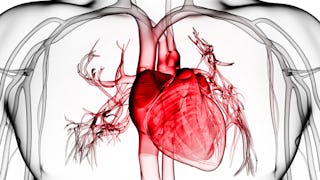
Skills you'll gain: Vital Signs, Blood Pressure, Respiration, Respiratory Care, Pulmonology, Pain Management, Physiology, Hemodynamics, Health Assessment, Cardiology, Thermal Management, Capillary, Neurology, Anatomy, Clinical Assessment
 Status: NewStatus: Free Trial
Skills you'll gain: Electocardiography, Cardiac Dysrhythmia, Cardiac Surgery, Chronic Diseases, Hemodynamics, Patient Education And Counseling, Cardiology, Medical Surgical Nursing, Care Management, Cardiac Stress Testing, Patient Observation, Nursing, Patient Evaluation, Life Support, Electrophysiology, Care Coordination, Patient Education and Support, Anatomy, Physiology, Clinical Nursing
 Status: Free Trial
University of Colorado System
Skills you'll gain: Patient Evaluation, Airway Management, Trauma Care, Automated External Defibrillator, Medical History Documentation, Patient Communication, Child Health, Childbirth, Basic Life Support (BLS) Certification, Pediatric First Aid, Defibrillation, Clinical Assessment, Hazardous Waste Operations And Emergency Response Standard (HAZWOPER), Blood Pressure, Vital Signs, Respiratory Care, Neurology, Medication Administration, Cardiology, Pharmacology
What brings you to Coursera today?
 Status: NewStatus: Free Trial
Skills you'll gain: Medication Administration, Basic Patient Care, Direct Patient Care, Patient Communication, Smart Goals, Nursing and Patient Care, Clinical Nursing, Nursing, Nurse Education, Nursing Basics, Clinical Leadership, Basic Nursing Skills, Care Coordination, Nursing Administration, Goal Setting, Nursing Care, Caregiving, Patient Advocacy, Nursing Practices, Professional Development
 Status: Free Trial
MedCerts
Skills you'll gain: Patient-centered Care, Informed Consent, Patient Assistance, Basic Patient Care, Patient Communication, Nursing Basics, Healthcare Ethics, Direct Patient Care, Caregiving, Home Health Care and Assisted Living, Toileting, Dignity in Care, Oral Hygiene, Nursing Care, Home Health Care, Nursing Homes, Personal Care, Medical Support, Hospital Experience, Communication
 Status: NewStatus: Free Trial
Skills you'll gain: Nursing Management, Clinical Leadership, Continuous Quality Improvement (CQI), Stakeholder Engagement, Health Equity, Nursing Administration, Financial Forecasting, Patient Safety, Composure, Conflict Management, Teamwork, Nursing, Change Management, Financial Management, Decision Making, Healthcare Ethics, Quality Improvement, Staff Management, Strategic Planning, Delegation Skills
 Status: Preview
Skills you'll gain: Clinical Nursing, Patient Communication, Nursing and Patient Care, Nursing Care, Nursing Basics, Nursing Process, Clinical Assessment, Basic Nursing Skills, Health Assessment, Treatment Planning, Patient Safety, Care Management, Direct Patient Care, Nursing, Basic Patient Care, Nursing Practices, Communication, Prioritization, Collaboration, Project Documentation
 Status: NewStatus: Free Trial
Lecturio
Skills you'll gain: Healthcare Ethics, Nursing Management, Patient-centered Care, Telehealth, Delegation Skills, Health Systems, Clinical Leadership, Constructive Feedback, Clinical Nursing, Nurse Education, Health Administration, Communication, Accountability, Empathy, Language Competency, Cultural Sensitivity, Active Listening, Clinical Assessment, Change Management, Continuous Quality Improvement (CQI)
 Status: Preview
University of Michigan
Skills you'll gain: Splinting, Airway Management, Obstetrics And Gynecology, Trauma Care, Respiratory Care, Nursing Care, Wound Care, Maternal Health, Emergency Nursing, Nursing, Basic Nursing Skills, Clinical Nursing, Orthopedics, Augmented and Virtual Reality (AR/VR), Critical Care, Patient Evaluation, Infection Control, Anatomy
In summary, here are 10 of our most popular nursing courses
- Nursing Assistant Fundamentals: MedCerts
- Nursing Prerequisites: Essential Sciences for Future Nurses: Lecturio
- Nursing Fundamentals: Key Skills Training with 3D Simulation: Immersify
- Vital Signs: Understanding What the Body Is Telling Us: University of Pennsylvania
- Medical-Surgical Nursing: Cardiovascular & ECG Essentials: Lecturio
- Become an EMT: University of Colorado System
- Healthcare Career Explorer: Nursing Professions: Coursera
- Nursing Assistant Essentials: MedCerts
- Lead with Impact: Nursing Leadership & Strategy: Coursera
- Nursing Fundamentals: Skills for Patient Care Excellence: Coursera










