Middle East Courses
Middle East courses can help you learn about regional history, cultural dynamics, political systems, and economic trends. You can build skills in critical analysis, cross-cultural communication, and research methodologies. Many courses introduce tools like geographic information systems (GIS) for mapping socio-political changes, data analysis software for economic modeling, and digital platforms for engaging with diverse perspectives.
Popular Middle East Courses and Certifications
 Status: Preview
Tel Aviv University
Skills you'll gain: World History, Political Sciences, International Relations, European History, Social Sciences, Diplomacy, Governance, Cultural Diversity
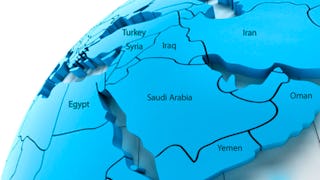 Status: Preview
Tel Aviv University
Skills you'll gain: Political Sciences, World History, International Relations, Policy Analysis, Social Studies, Diplomacy, Social Justice, Culture, Governance, Sociology, Security Strategy
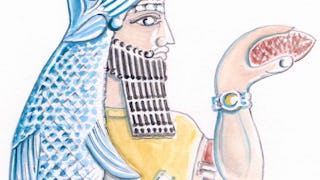 Status: Free
Ludwig-Maximilians-Universität München (LMU)
Skills you'll gain: Ancient History, Governance, Social Studies, World History, Anthropology, Diplomacy, Sociology, Political Sciences, Cultural Diversity, Economics
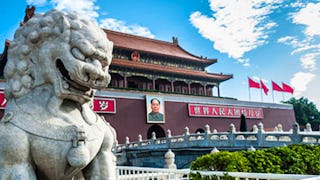 Status: Preview
The Hong Kong University of Science and Technology
Skills you'll gain: Political Sciences, Policy Development, Public Policies, Policy Analysis, Economics, Policy, and Social Studies, Social Sciences, International Relations, Socioeconomics, Economics, Economic Development, Governance, Culture
 Status: Free Trial
ESSEC Business School
Skills you'll gain: Communication Strategies, Cultural Sensitivity, Intercultural Competence, Cultural Diversity, Verbal Communication Skills, Cultural Responsiveness, Interpersonal Communications, Relationship Building, Non-Verbal Communication, Culture, Diversity Awareness, Negotiation, International Relations, Rapport Building, Diplomacy
 Status: Preview
University of London
Skills you'll gain: Social Justice, Community Development, Conflict Management, Sustainable Development, Social and Human Services, Social Impact, International Relations, Social Work, Sociology, Advocacy, Creativity, Law, Regulation, and Compliance, Storytelling, Peer Review
What brings you to Coursera today?
 Status: Preview
Skills you'll gain: Oil and Gas, Petroleum Industry, Energy and Utilities, Climate Change Mitigation, International Relations, Environmental Issue, Electric Power Systems, Environment and Resource Management, Economic Development, Natural Resource Management, Environmental Policy, Economics, Political Sciences, Economics, Policy, and Social Studies, Social Studies, Sustainable Technologies, Market Dynamics, Sustainable Development
 Status: NewStatus: Free Trial
Sungkyunkwan University
Skills you'll gain: Music Theory, Music, Music History, Compassion, World Music, Political Sciences, Empathy & Emotional Intelligence, Emotional Intelligence, Classical Music, Recognizing Others, Empathy, Aesthetics, International Relations, Self-Awareness, Psychology, Ethical Standards And Conduct, Liberal Arts, Cultural Sensitivity, Culture, Ancient History
 Status: Preview
O.P. Jindal Global University
Skills you'll gain: International Relations, Diplomacy, Political Sciences, World History, Policy Development, Social Sciences, Public Affairs, Policy Analysis, Public Safety and National Security, Economics, Case Studies, Governance, Security Strategy, Analytical Skills
 Status: Preview
Universiteit Leiden
Skills you'll gain: World History, Cultural Diversity, Political Sciences, European History, Social Studies, Economic Development, Social Sciences, Economics, Sociology, Liberal Arts, Research, Science and Research
Birla Institute of Technology & Science, Pilani
Skills you'll gain: World History, Critical Thinking, Ancient History, Science and Research, Culture, Liberal Arts, General Science and Research, Social Sciences, Scientific Methods, European History, Analysis, Physics, Sociology, Economic Development, Research Methodologies, Innovation, Intellectual Property
 Status: Preview
University of Pennsylvania
Skills you'll gain: Ancient History, Art History, Anthropology, Social Studies, Timelines, World History, Public History, Liberal Arts, Cultural Diversity, Storytelling, Writing
In summary, here are 10 of our most popular middle east courses
- The Emergence of the Modern Middle East - Part I: Tel Aviv University
- The Emergence of the Modern Middle East - Part II: Tel Aviv University
- Organising an Empire: The Assyrian Way: Ludwig-Maximilians-Universität München (LMU)
- Chinese Politics Part 1 – China and Political Science: The Hong Kong University of Science and Technology
- International and Cross-Cultural Negotiation: ESSEC Business School
- Internal Displacement, Conflict and Protection: University of London
- Politics and Economics of International Energy: Sciences Po
- Korean Philosophy Electives: Sungkyunkwan University
- Foreign Policies of Great, Middle, and Small Powers: O.P. Jindal Global University
- The Cosmopolitan Medieval Arabic World: Universiteit Leiden










