CAD Courses
CAD courses can help you learn 2D and 3D modeling, technical drawing, and design visualization. You can build skills in creating detailed schematics, understanding material properties, and applying design principles to various projects. Many courses introduce tools like AutoCAD, SolidWorks, and SketchUp, that support drafting and prototyping in fields such as architecture, engineering, and product design. By mastering these tools, you can effectively communicate your ideas and bring your designs to life.
Popular CAD Courses and Certifications
 Status: Free Trial
Dassault Systèmes
Skills you'll gain: 3D Modeling, Mechanical Engineering
Skills you'll gain: AutoCAD, Architectural Drawing, Drafting and Engineering Design, Blueprinting, Technical Drawing, Computer-Aided Design, Plot (Graphics)
National Taiwan University
Skills you'll gain: 3D Modeling, SketchUp (3D Modeling Software), Software Installation, Visualization (Computer Graphics), Design Software, Graphical Tools
 Status: Free Trial
Dassault Systèmes
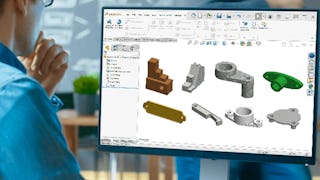
Skills you'll gain: SolidWorks (CAD), Computer-Aided Design, Drafting and Engineering Design, 3D Modeling, Mechanical Engineering
 Status: Preview
University of Michigan
Skills you'll gain: 3D Modeling, 3D Assets, Design Elements And Principles, Computer Graphics, Visualization (Computer Graphics), Design Software, Computer-Aided Design, Design, Architectural Design, User Interface (UI)
 Status: NewStatus: Free Trial
Skills you'll gain: AutoCAD, Architectural Drawing, Autodesk, 3D Modeling, Technical Drawing, Engineering Drawings, Visualization (Computer Graphics), Computer-Aided Design, 3D Assets, Drafting and Engineering Design, Architectural Design, Building Design, AutoCAD Civil 3D, Software Visualization, Design Software, User Interface (UI)
What brings you to Coursera today?
 Status: NewStatus: Free Trial
Skills you'll gain: Architectural Drawing, AutoCAD, Architectural Design, Building Design, Technical Drawing, Engineering Drawings, Drafting and Engineering Design, Computer-Aided Design, Architecture and Construction, Sustainable Architecture, Autodesk, AutoCAD Civil 3D, Structural Engineering, Land Development, Functional Design, Conceptual Design, Engineering Documentation, Layout Design, Traffic Flow Optimization, 3D Modeling
 Status: Free
Skills you'll gain: Simulation and Simulation Software, Engineering Analysis, Finite Element Methods, Simulations, Engineering, Computer-Aided Design, Cloud Technologies, Engineering Design Process, Cloud Computing
 Status: Free
Skills you'll gain: 3D Modeling, SketchUp (3D Modeling Software), Computer Graphics, Visualization (Computer Graphics), Design Software, Product Design, Graphic Design
 Status: Free Trial
National Taiwan University
Skills you'll gain: Engineering Drawings, AutoCAD, Drafting and Engineering Design, Computer-Aided Design, Technical Drawing, Geometric Dimensioning And Tolerancing, Engineering Design Process, Diagram Design, Engineering Documentation, Blueprint Reading, Graphics Software, 3D Modeling, Visualization (Computer Graphics), Building Information Modeling
 Status: Preview
Skills you'll gain: 3D Modeling, Computer-Aided Design, Drafting and Engineering Design, 3D Assets, Mechanical Design, Simulation and Simulation Software, Design Software, Engineering Software, Manufacturing Processes, Engineering Analysis
 Status: NewStatus: Free Trial
Skills you'll gain: AutoCAD, Technical Drawing, Engineering Drawings, Computer-Aided Design, Architectural Drawing, Drafting and Engineering Design, Autodesk, User Interface (UI)
In summary, here are 10 of our most popular cad courses
- SOLIDWORKS 3D CAD for Education: Dassault Systèmes
- AutoCAD for beginners: Drafting blueprints and schematics: Coursera
- 3D CAD Fundamental: National Taiwan University
- SOLIDWORKS Foundations: Sketching and Extrusion: Dassault Systèmes
- Introduction to 3D Modeling: University of Michigan
- AutoCAD Foundation & Core Drafting Mastery: EDUCBA
- AutoCAD Architectural Design & Residential Planning: EDUCBA
- Computational Fluid Mechanics - Airflow Around a Spoiler: Coursera
- SketchUp: how to start modelling simple 3D objects: Coursera
- 工程圖學 2D CAD: National Taiwan University










